Quick reference

QuestionWhat to expect
Which projections are confirmed?AP, AP axial, oblique, and lateral cervical spine projections.
Can users try other projections?Yes. These are confirmed examples. Other projections may be possible when the simulated setup supports them.
What anatomy is included?Cranium, cervical spine, thoracic vertebrae, scapulae, clavicles, ribs 1-10, sternum, and upper lumbar spine.
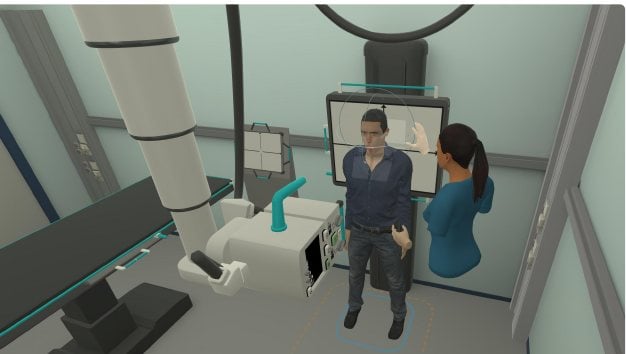
What setup is used?Wall bucky workflow with erect patient positioning.
What movement is included?Head flexion, extension, and rotation; neck bending, tilting, and rotation; jaw opening/closing; and patient axial rotation.
What bone variations exist?Healthy bone version.
Known limitationProne cervical spine positioning is not supported.

Projection expectations

The projections listed on this page are confirmed examples for this simulation module. They do not define the full limit of what can be attempted. The simulator creates an image from the selected anatomy, patient position, joint movement, detector setup, tube position, collimation, and exposure settings, so other projections may be possible when the setup supports them.

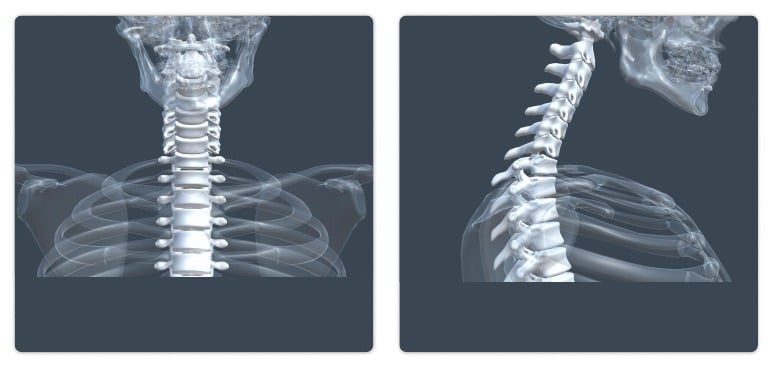
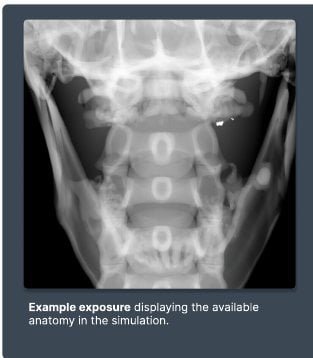
Visual examples

Simulator setup preview

Imaging capabilities

CapabilityDetails
Radiographic tubeFull range of motion, including vertical, horizontal, tilt, and rotation. The cassette can be rotated, and collimation size is adjustable.
Detector methodsThe detector setup uses wall bucky.
Confirmed projectionsConfirmed examples include AP, AP axial, oblique, and lateral cervical spine projections. They do not define the full limit of what can be attempted. Other projections may be possible when the simulated setup supports them.

Anatomy and movement

AreaDetails
Included anatomyCranium, cervical spine, thoracic vertebrae, scapulae, clavicles, ribs 1-10 bilateral, sternum, and upper lumbar spine.
Joint mobilityHead flexion, extension, and rotation through the upper cervical joints. Neck bending, tilting, and rotation through the cervical spine. Jaw opening and closing through the temporomandibular joint. Patient axial rotation for in-plane adjustment.

Bone variations

  • Healthy bone version

Known limitations

The C-spine simulation is limited to erect patient positioning. This restricts projections that require prone positioning. For those workflows, refer to the skull simulation.